Halong Bay Travel Guide for First-Time Visitors: Cruises, Routes and Practical Tips
November 11, 202618 min read
Planning your first trip to Halong Bay can feel surprisingly complicated. Photographs show limestone islands rising from the sea, but booking pages introduce a different set of questions: Which bay should you visit? Is one night enough? Does your cruise include transport from Hanoi? How much time will you actually spend exploring?
This Halong Bay travel guide brings those decisions together. You will learn how to choose a suitable route, decide how long to stay, organize your transfers, understand cruise packages, and prepare for the conditions you may encounter.
The most useful starting point is to decide what you want from the experience. A day among the islands, a comfortable overnight cruise, and an active trip combining kayaking with Cat Ba Island can all be rewarding. They require different itineraries and expectations.
Where is Halong Bay, and which bay should you visit?
Limestone formations and sheltered waterways define the Halong Bay landscape.
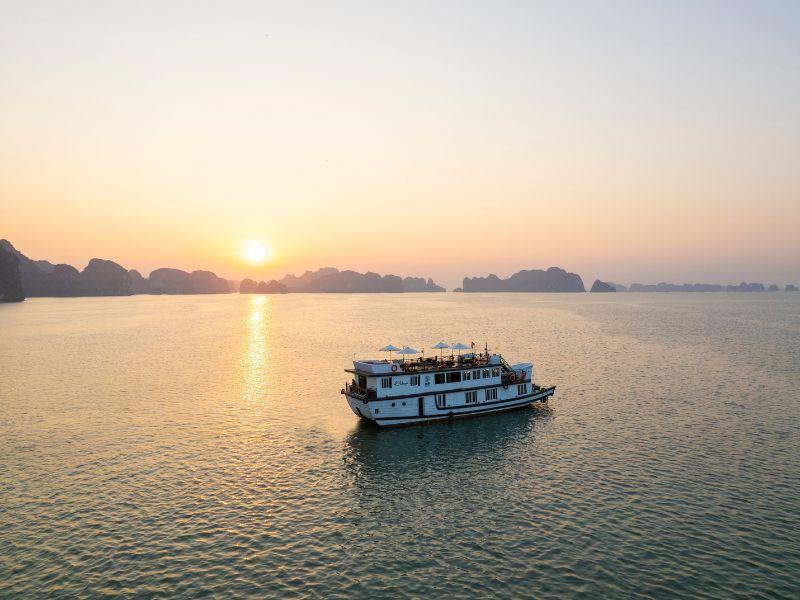
Halong Bay lies in northeastern Vietnam, east of Hanoi, in the Gulf of Tonkin. Its defining landscape consists of limestone islands, steep rock formations, sheltered waterways, and caves.
You will see both “Halong Bay” and “Ha Long Bay” in travel information. They refer to the same destination. However, “Halong Bay” is also used broadly in tourism marketing for cruises operating in neighboring waters.
That distinction matters when comparing trips. Two cruises advertised under the same destination name may follow different routes, visit different attractions, and depart from different terminals.
The UNESCO World Heritage property is officially named Ha Long Bay–Cat Ba Archipelago. Its recognition reflects both its scenic landscape and geological importance. The name does not mean every cruise visits Cat Ba Island or follows the same sightseeing circuit.
Is Halong Bay worth visiting?
Halong Bay is worth visiting if you enjoy dramatic coastal scenery and want to experience it from the water. Its appeal comes from moving through the landscape: watching layers of islands appear around a bend, paddling beside a rock wall, or sitting on deck as the light changes.
Your enjoyment will depend partly on the trip you choose.
An overnight cruise can suit travelers who want meals, accommodation, and excursions arranged together. A day cruise can work well when time is limited. An island-based stay may suit visitors who prefer choosing restaurants and activities independently.
Consider your expectations before booking:
For scenery: prioritize the sailing route, outdoor deck space, and time underway.
For relaxation: examine the excursion schedule and opportunities to remain onboard.
For activities: check the actual kayaking, walking, and swimming arrangements.
For privacy: compare passenger capacity, cabin layout, and private charter options.
For independent travel: consider combining a boat excursion with accommodation on land.
Halong Bay is a major tourism destination. Popular attractions can be busy, and weather can alter the view or the itinerary. Expecting complete solitude at every stop is unlikely to be realistic.
Halong Bay, Lan Ha Bay and Bai Tu Long Bay
These neighboring areas share limestone scenery, but they offer different routes and access arrangements.
Avoid choosing solely on claims that one bay is always quieter or more beautiful. Passenger numbers, sailing times, weather, and the selected route all influence the experience.
Start with the places and activities you want, then compare the boats that actually provide them.
When to visit Halong Bay and how to handle weather changes
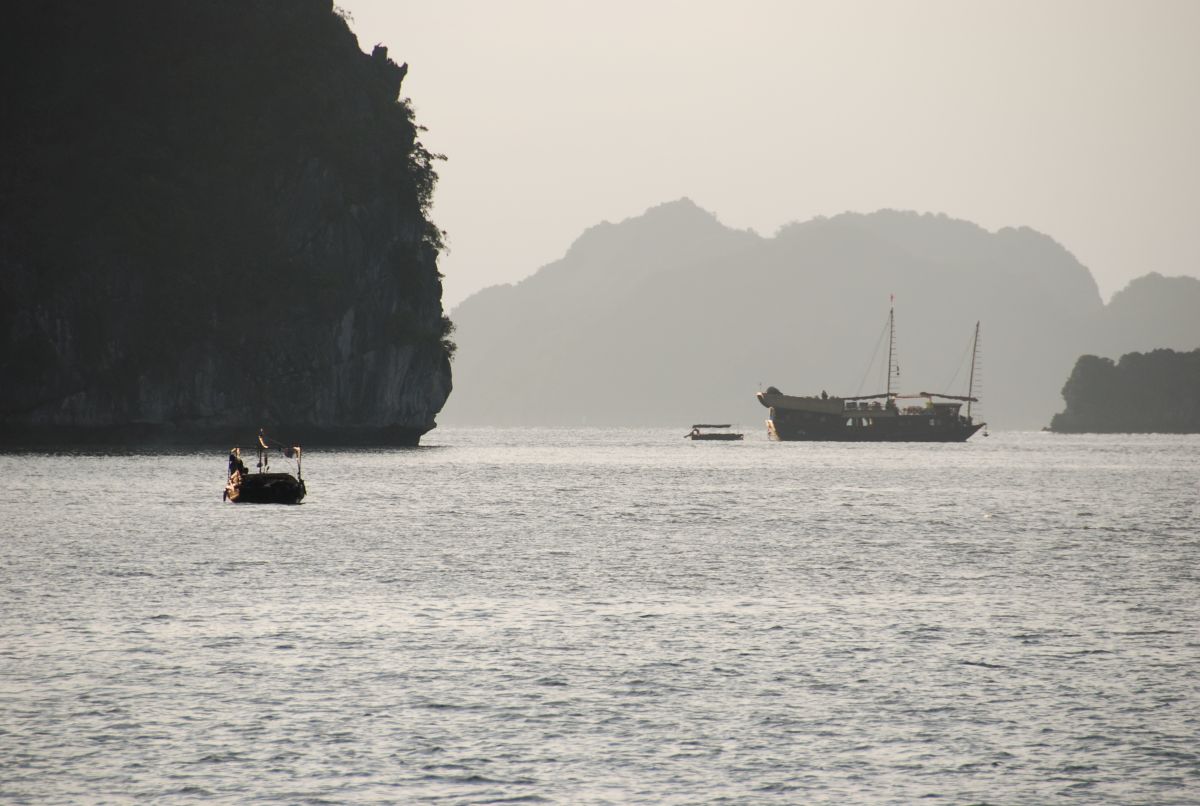
Visibility and the appearance of the limestone islands change with light and weather.
There is no single month that guarantees ideal conditions. Think about whether you value warm swimming weather, comfortable sightseeing, clear views, or flexibility in your travel dates.
Northern Vietnam has seasonal variation. Cooler months can bring mist, while hotter months may bring heavy rain and storms. A photograph taken on a bright summer morning does not represent every day of that season.
These are seasonal patterns rather than a forecast for your departure date. Check conditions close to travel and follow instructions from your operator when plans change.
Weather changes and cancellation policies
Distinguish between an activity change and a sailing cancellation.
Rain might lead to adjustments to kayaking or a shore excursion. Conditions affecting navigation may lead to a delayed departure, a shortened sailing, or a canceled trip. The appropriate response depends on the circumstances and operational decisions at the time.
Before paying, ask:
What happens if the cruise is canceled before pickup?
What happens if passengers have already traveled to the port?
How are refunds calculated if the itinerary is shortened?
Can the booking move to another date?
Which transport or accommodation charges remain payable?
Request the policy in writing. A general promise that staff will “take care of everything” is less useful than clear terms.
How many days should you spend in Halong Bay?
An overnight cruise adds cabin accommodation to the time spent exploring the bay.
Your available time should shape your cruise choice early in the planning process.
A day trip gives you a view of the bay without an overnight stay. It can suit a short Vietnam itinerary, but a round trip from Hanoi also includes substantial road travel. Examine hours on the water rather than the overall advertised tour duration.
A two-day, one-night cruise provides an evening and morning in the bay. It is a reasonable starting point for travelers who want the overnight experience without dedicating several days to it.
Remember that “two days” describes calendar dates. It does not necessarily mean two full days of sailing. Boarding may take place around the middle of the first day, with disembarkation during the following morning.
A three-day, two-night cruise gives you an additional day between arrival and departure. Depending on the operator, that day might involve another boat, a longer excursion, or more activities.
Ask how the second day works. Some travelers enjoy exploring on a smaller excursion vessel, while others expect to remain on their main cruise ship.
Choosing between a day trip, one night and two nights
Choose a day trip if you mainly want an introduction to the scenery and have little spare time.
Consider one night if watching the bay in the evening and early morning is important.
Consider two nights if you want more time for activities or prefer to avoid making the arrival and departure process such a large part of the experience.
If your schedule allows, keep some flexibility around the cruise rather than placing it immediately before a flight you cannot miss.
Getting from Hanoi to the correct cruise port
Confirm the exact port and reception point named on your cruise booking.
Hanoi is a common starting point for visiting Halong Bay. Road transfers connect the capital with cruise terminals and accommodation around the coast.
Travel time depends on your pickup location, traffic, stops, and destination terminal. A quoted driving time should not be treated as a guaranteed door-to-boat journey.
The most practical choices are usually an operator-arranged transfer, a shared transport service, or a private car.
Operator-arranged transfers
A transfer arranged through your cruise operator can simplify coordination. The transport is linked to the sailing, and staff should know where passengers need to check in.
Confirm whether it is included or charged separately.
You should also check:
Whether your hotel is within the pickup area.
Whether you need to meet at a central location.
Whether the service collects passengers from several hotels.
How much luggage you can bring.
Where the return transfer ends.
Who to contact if pickup is delayed.
Travelers staying outside the usual collection area may find a hotel pickup promise has important limits.
Shared transport services
Shared services can be useful for independent travelers and those staying on land before a cruise.
The key issue is the drop-off point. A service advertised as traveling to “Halong” might terminate somewhere that still requires a taxi journey to your cruise terminal.
Before booking, send the transport provider the exact address from your cruise confirmation. Ask whether the vehicle goes there directly and how much time to allow for the final connection.
Check the return arrangements with equal care. A convenient outward journey does not automatically mean the same service suits your disembarkation time.
Private cars
A private car offers more control over departure time and stops. It can be worth comparing for families, small groups, or travelers with extra luggage.
Ask for a written quote identifying the vehicle size, pickup and drop-off addresses, tolls, waiting arrangements, and any additional charges.
If you need child restraints or assistance with mobility equipment, request those details before confirming. Do not assume a standard transfer automatically includes them.
Airport connections
A direct transfer from Noi Bai Airport may look efficient, but it introduces uncertainty if your flight and cruise departure are on the same day.
Allow for immigration, baggage collection, a delayed arrival, road travel, and the operator’s check-in deadline.
Arriving in Hanoi the previous day is a useful option when you want more breathing room. It also gives you time to recover from a long flight before starting an organized itinerary.
For the international arrival portion of your trip, consult our Vietnam entry visa planning guide and confirm the requirements relevant to your passport and travel dates.
Confirm your port and meeting point
Use the terminal and meeting address supplied by your cruise operator.
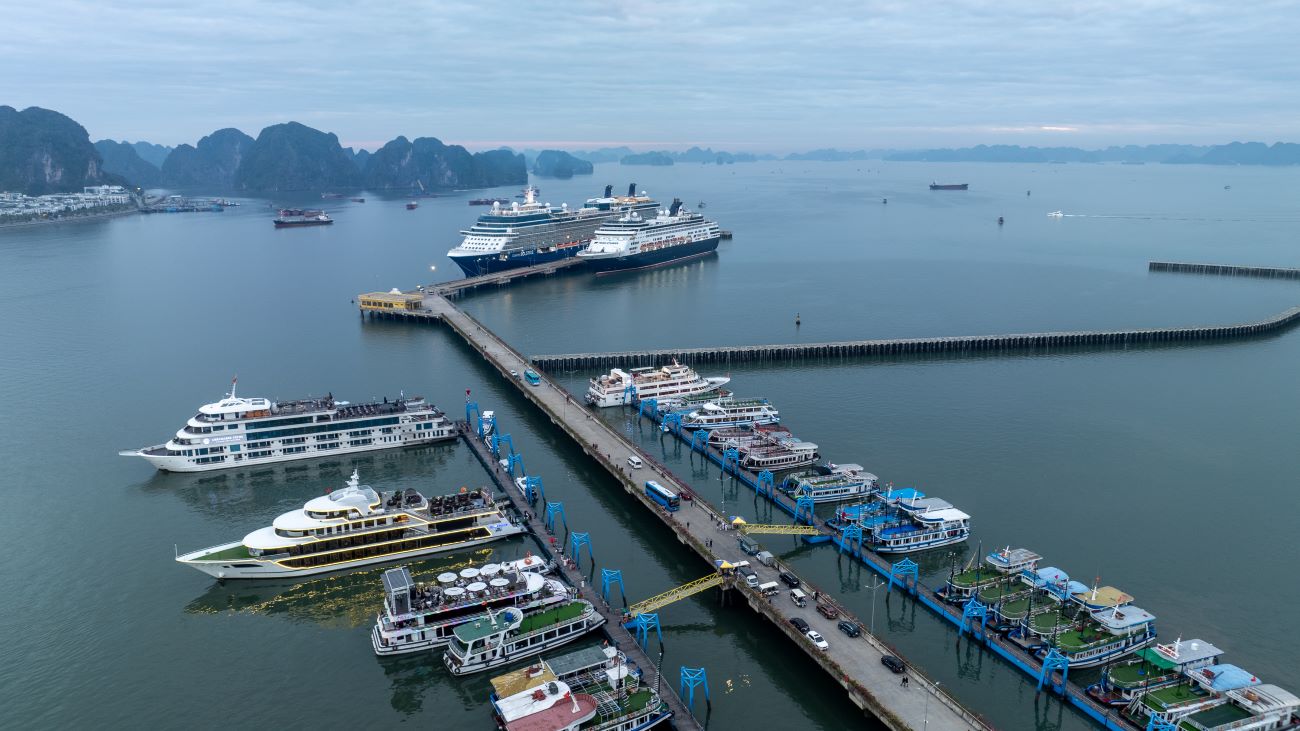
Tuan Chau and Ha Long International Cruise Port in Bai Chay are different departure locations. Your booking may also specify a particular lounge, terminal entrance, or meeting point within a port area.
Save these details offline:
Cruise name and booking reference.
Terminal name and complete address.
Meeting point or lounge.
Required arrival time.
Local contact number.
Confirmed transfer arrangements.
A map pin is useful, but pair it with the written address. Before leaving your hotel, check that your driver has the same destination.
How to choose the right cruise, vessel and cabin
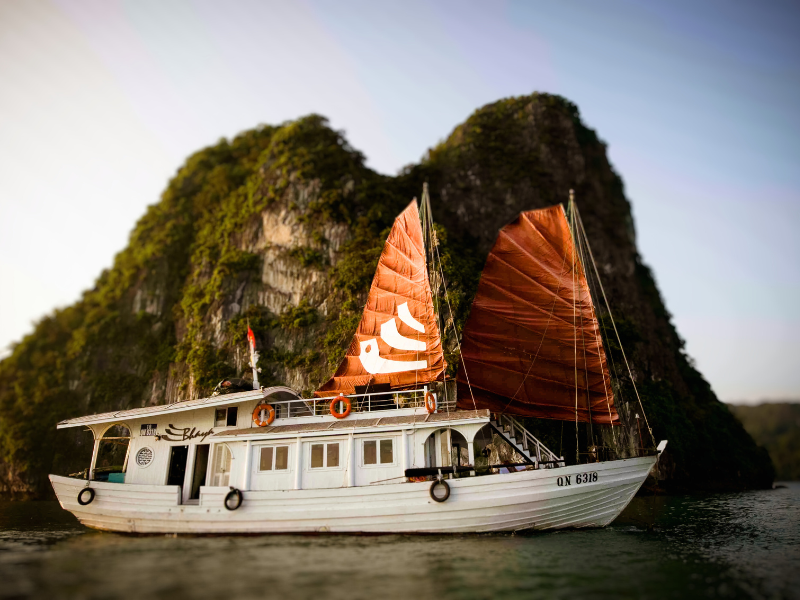
Compare the sailing program as well as the appearance of the cruise vessel.
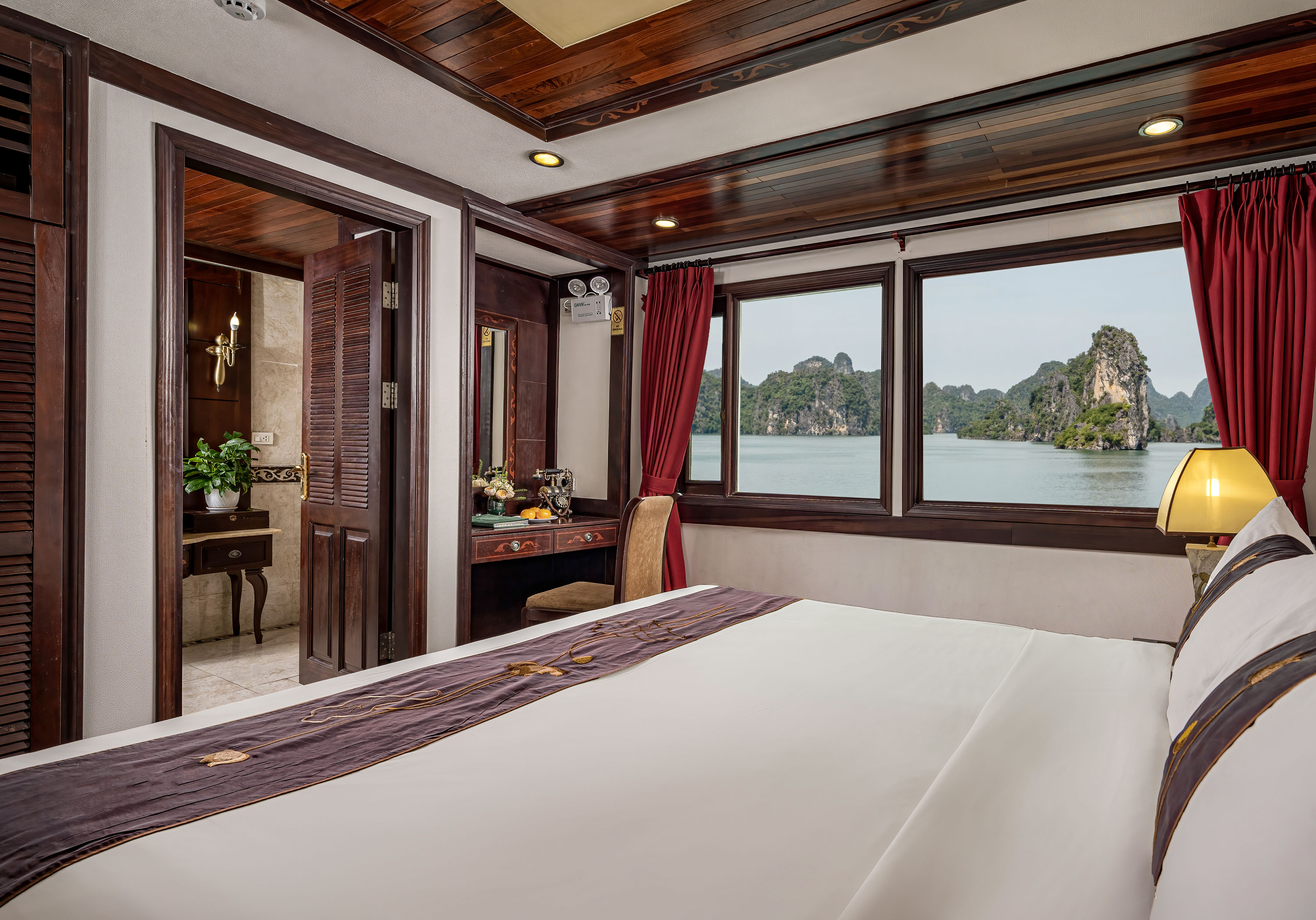
Large windows, balconies, and spacious bathrooms can make a cruise comfortable, but they do not tell you where the boat goes.
First, read the itinerary. Our Halong Bay cruise guide provides another reference for comparing boats and routes. Identify the bay, named attractions, activities, and expected time spent sailing. Then examine the vessel and cabin.
If visiting a particular cave or viewpoint matters to you, get confirmation that it belongs to the selected departure’s program.
For an alternative route around Cat Ba, you can explore Lan Ha Bay cruise options and compare the itineraries, transfer arrangements, and package inclusions. Confirm availability and final terms for your dates before making a payment.
Boat size and atmosphere
Think about how you want to spend your time onboard.
A larger vessel may offer more shared facilities, but it also means traveling with more passengers. A smaller boat may offer a more intimate atmosphere, although it may have fewer facilities and cabin choices.
Neither format guarantees a better trip.
Ask about:
Maximum passenger capacity.
Dining arrangements.
Shared deck space.
Cabin location and access.
Evening entertainment.
Family groups or group bookings.
Whether excursions are optional.
If rest is a priority, ask whether passengers can remain onboard during excursions and what services remain available.
Cabin categories and access
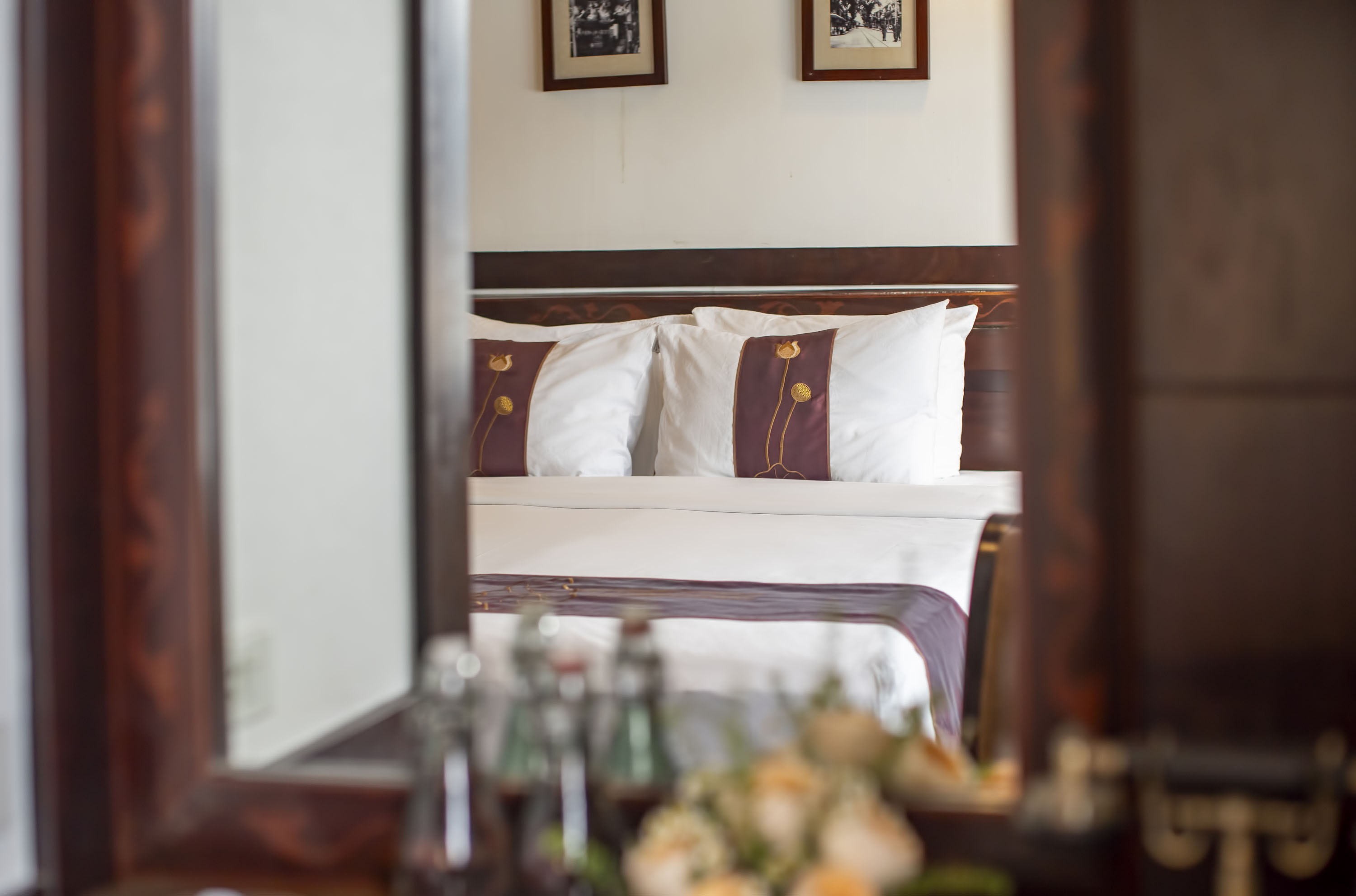
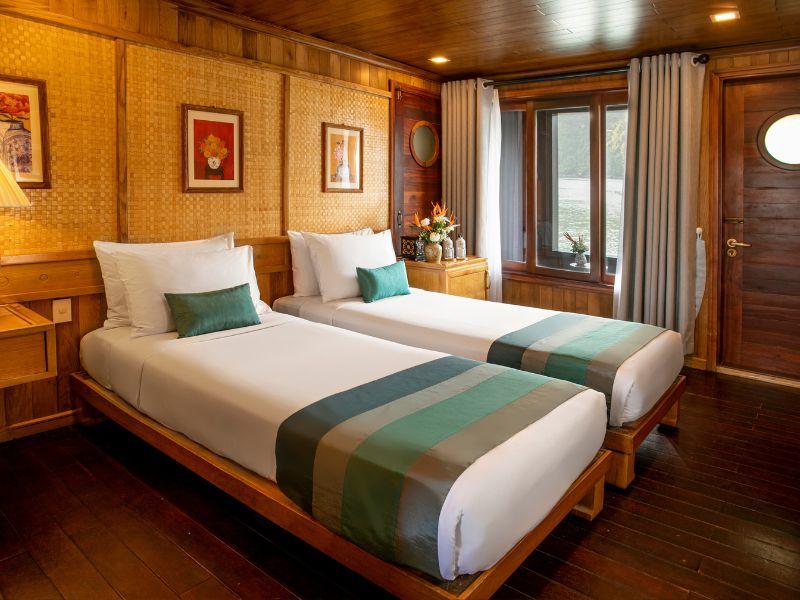
“Sea view” and “private balcony” describe different features. Photographs may also show the vessel’s largest suite rather than the cabin included in the starting price.
Check the exact category on your quotation.
Useful details include bed configuration, usable floor space, balcony access, bathroom layout, and whether an extra bed affects movement around the room.
Travelers sensitive to noise should ask about proximity to engines, kitchens, stairs, and shared entertainment areas. Passengers who find stairs difficult should request specific information about the route from boarding point to cabin and dining room.
Compare the complete package
A lower headline rate can become more expensive after transport and activities are added.
Return transfers and the exact pickup area.
Cabin category, meals and drinking water.
Entrance fees, kayaking and optional activities.
Drinks, spa services and other onboard extras.
Taxes, cancellation terms and the final total for your party.
For a first visit, comparing the total cost for the same travelers and dates is more useful than comparing “from” prices.
Budgeting and planning for your travel group
Cruise quotations should identify the vessel, services and arrangements included.
Your spending plan may include a hotel in Hanoi, transport to the coast, a cruise, drinks onboard, optional services, and accommodation after returning.
Keep those categories separate so you can see where your money goes.
For example, a cruise with transfers and kayaking included might offer better value for your plans than a cheaper cabin requiring both items to be purchased separately.
Carry a suitable payment method for extras, and ask whether cards are accepted onboard. Keep some cash available for smaller expenses, while avoiding carrying more than you need.
Family, dietary and mobility requirements
Families should confirm children’s pricing, sleeping arrangements, balcony design, and appropriately sized life jackets. Ask about age or participation limits for activities.
Travelers with dietary requirements should explain them clearly before booking. Confirm what the kitchen can accommodate rather than relying on a broad description such as “international buffet.”
If you have mobility needs, request practical details about boarding, steps, tender boats, and excursion terrain. A cabin described as accessible does not necessarily make every part of the itinerary accessible.
Things to do in Halong Bay
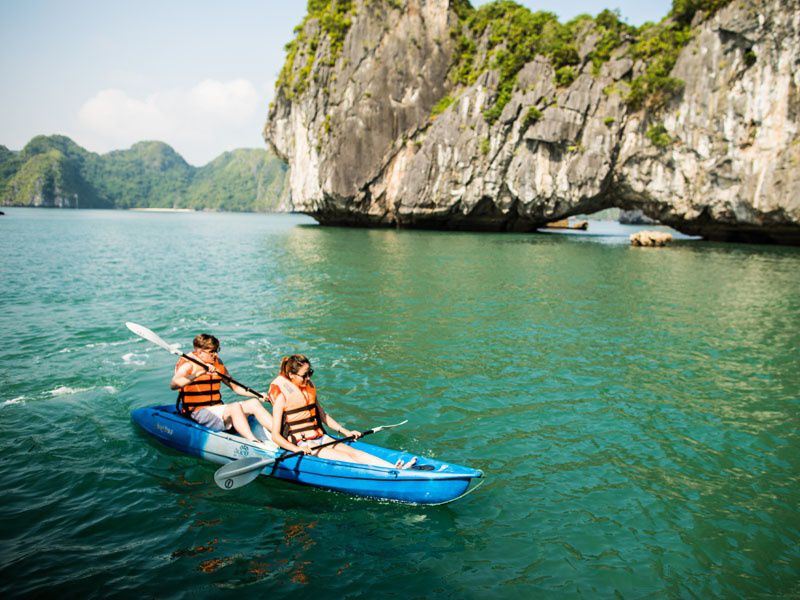
Kayaking near limestone cliffs is one activity offered on selected Lan Ha Bay routes.
Among the essential things to do in Halong Bay, simply spending time on deck deserves space in your plans.
Excursions give structure to the day, but constant activity can leave little time to appreciate the landscape. Look for an itinerary that balances scheduled stops with opportunities to sit outside and watch the islands pass.
If photography matters to you, consider outdoor viewing space and the sailing schedule. A private balcony can be pleasant, but it may face away from a particular view. Shared decks can offer more flexibility.
Cave visits
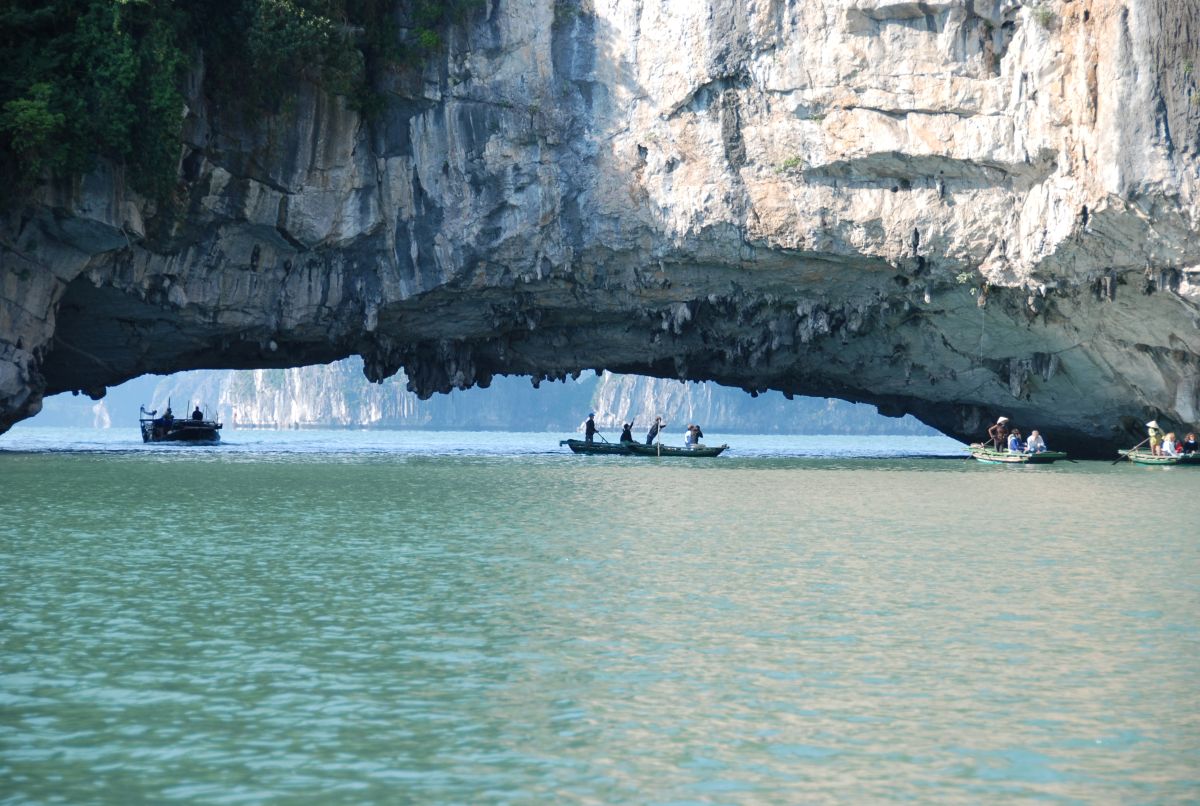
Cave excursions reveal another side of the limestone landscape. Depending on the route, visitors may walk through large chambers or follow paths between formations.
Check the physical demands before committing. Cave visits may involve stairs, uneven surfaces, warm conditions, and time spent standing.
Wear footwear with grip and carry only what you need. Follow marked paths, avoid touching formations, and keep pace with the guide where group movement is required.
Kayaking and rowing boats
Kayaking brings you closer to cliffs and sheltered waterways. It can be a highlight for travelers who want a more active experience.
Ask how much paddling time is scheduled, whether beginners receive instruction, and whether the activity is guided.
Wear the supplied life jacket correctly and follow the designated route. Wind, current, tide, and local operating conditions can affect what is possible.
If you prefer not to paddle, ask whether a rowing boat alternative is available. It should be confirmed for your particular excursion rather than assumed from another itinerary.
Island viewpoints and swimming
Some routes include an island stop combining a viewpoint walk with time near a beach.
These visits can suit travelers who enjoy a short climb, although steps, heat, and crowds may make them more demanding than photographs suggest.
Bring water and avoid scheduling every activity around a single promised view. Visibility changes, and weather may affect the stop.
Swimming should take place only where and when the crew permits it. Do not assume that every attractive stretch of water is an approved swimming location.
Onboard activities and meals
Cruises may offer cooking demonstrations, early morning movement sessions, or evening squid fishing. The exact program varies.
Choose a cruise because its core route and accommodation suit you. Treat supplementary activities as part of the overall experience, with participation and conditions confirmed onboard.
Food is another useful comparison point. If fresh seafood interests you, examine sample menus. If it does not, ask about alternatives before departure.
A sample two-day, one-night cruise itinerary
Check how cabin checkout and luggage are handled during the final morning aboard.
The following illustrates the general flow of an overnight visit. It is not a fixed schedule for every cruise.
Day one
Leave Hanoi with enough time for your confirmed check-in.
Arrive at the correct port and complete boarding formalities.
Settle into your cabin and have lunch.
Join the scheduled afternoon excursion.
Spend some time on deck before dinner.
Choose between evening activities and a quiet night.
Day two
Wake early if you want to experience the bay in morning light.
Have breakfast and join any scheduled excursion.
Pack and follow the cabin checkout instructions.
Finish the onboard program and disembark.
Meet your return transfer.
Check how luggage, cabin checkout, and the final meal are handled. Your cabin may need to be vacated before the boat reaches the terminal.
Combining Halong Bay with a wider Vietnam journey
Time on the bay can be combined with cultural visits and other northern destinations.
Hanoi makes a practical city stop before or after the bay. Ninh Binh offers another limestone landscape with different experiences on land and inland waterways. Cat Ba may suit travelers looking to add an island stay.
Avoid filling every day with a long transfer. A trip that looks efficient on a map can feel tiring when it includes repeated packing, hotel changes, and transport connections.
Browse our Vietnam destination guides to compare the places you want to include, then decide where an extra night would improve the journey.
What to pack for a Halong Bay trip
A compact overnight bag can be easier to store inside a cruise cabin.
Pack for a boat trip with excursions rather than for a resort stay alone.
A practical list includes:
Passport or identification requested by the operator.
Booking confirmation and saved contact details.
Comfortable clothes and a warmer layer for cooler conditions.
Footwear suitable for steps and damp surfaces.
Sun protection and a hat.
A light rain layer.
Swimwear if appropriate for your season and itinerary.
A protective pouch or dry bag for electronics during water activities.
Personal medication and essential toiletries.
A charging cable and power bank.
Ask about luggage storage if you want to leave a large suitcase in Hanoi. For an overnight cruise, a smaller bag can make boarding and cabin storage easier.
If you regularly experience motion sickness, discuss suitable preparation with a pharmacist or clinician before traveling.
Responsible travel in Halong Bay
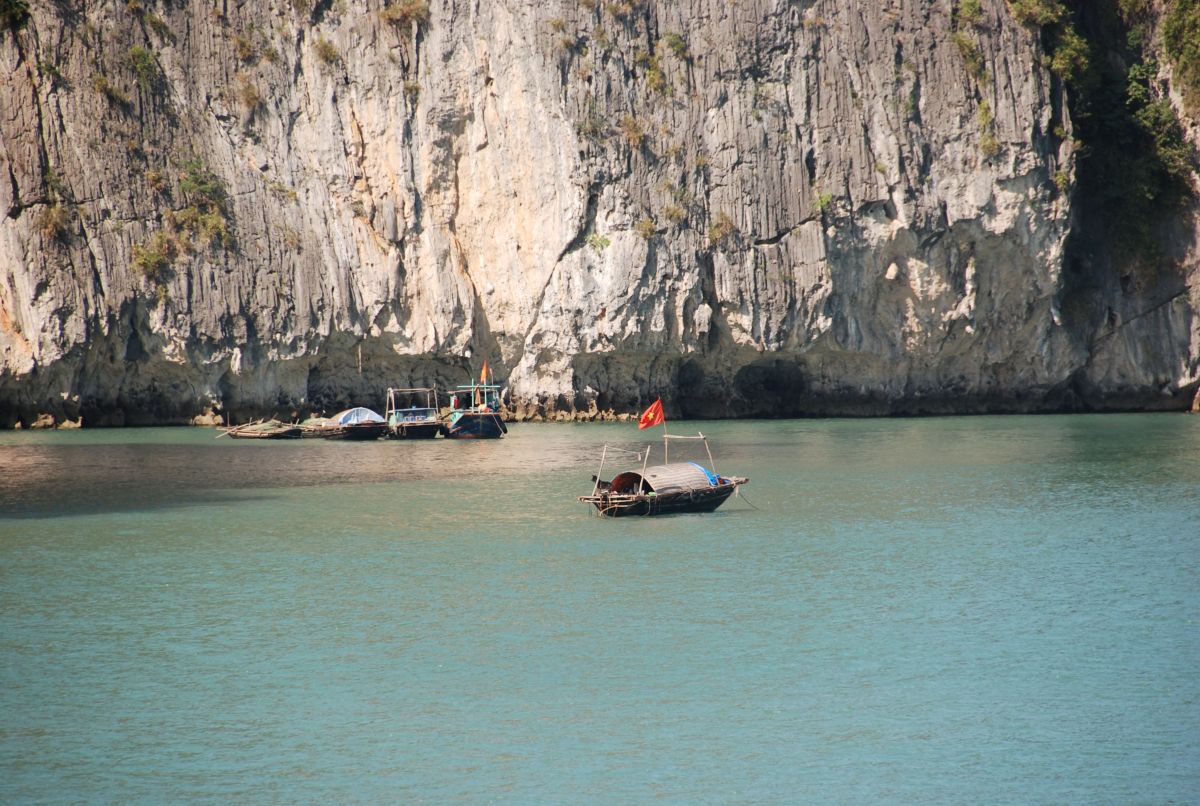
Floating communities form part of the inhabited coastal landscape.
The bay is a working and inhabited coastal environment as well as a visitor destination.
Keep litter with you, use refill facilities where available, and follow instructions around caves, wildlife, and water activities. Avoid touching or removing natural features.
Ask operators practical questions about waste handling and environmental measures. Specific explanations are more useful than a general sustainability slogan.
Treat fishing communities and residents respectfully. Ask before taking close photographs of people, and follow your guide’s advice during community visits.
Common mistakes and your final booking checklist
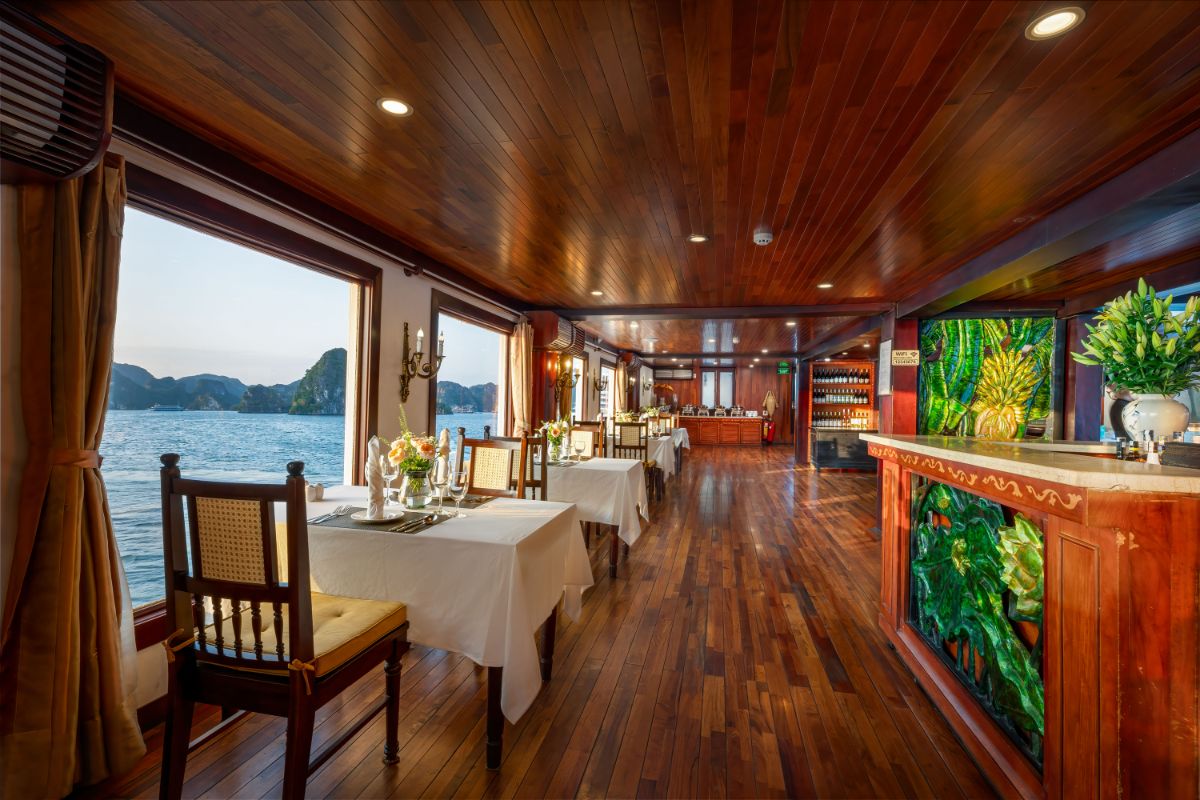
Review onboard facilities, dining and other inclusions before confirming a cruise.
Booking from photographs alone. Read the route, cabin category, and package terms.
Assuming every cruise visits the same attractions. Confirm the places that matter to you.
Comparing prices with different inclusions. Calculate the total payable cost for your party.
Leaving the port details until departure morning. Save the address and confirm it with your driver.
Scheduling a tight onward connection. Allow for disembarkation, road travel, and disruption.
Expecting guaranteed sunshine or swimming. Choose a trip you can enjoy under a range of conditions.
Your final booking checklist
Before paying, make sure you can answer these questions:
Which bay and route does the cruise follow?
How much time will you spend onboard?
Which vessel and cabin category are confirmed?
What is included in the final price?
Where and when must you check in?
Are transfers arranged in both directions?
What are the cancellation and weather policies?
Have dietary, family, or mobility requirements been acknowledged?
Who should you contact if plans change?
Does the return timing work with the next part of your trip?
A clear set of answers will make your first visit easier to organize.
The next planning step depends on what remains undecided. Compare cruise costs and cabins if you are ready to book; examine seasonal weather if your dates are flexible; resolve transport if you are traveling independently; compare trip lengths if time is tight; or review the differences between Halong, Lan Ha, and Bai Tu Long if the route is still unclear.
Use this Halong Bay travel guide as your starting point, then build the trip around your own priorities. Choose the landscape and activities you want to experience, give the journey enough time, and confirm the practical details before departure.