Mai Chau Travel Guide: Plan Your First Visit to Vietnam’s Rural Valley
November 15, 202616 min read
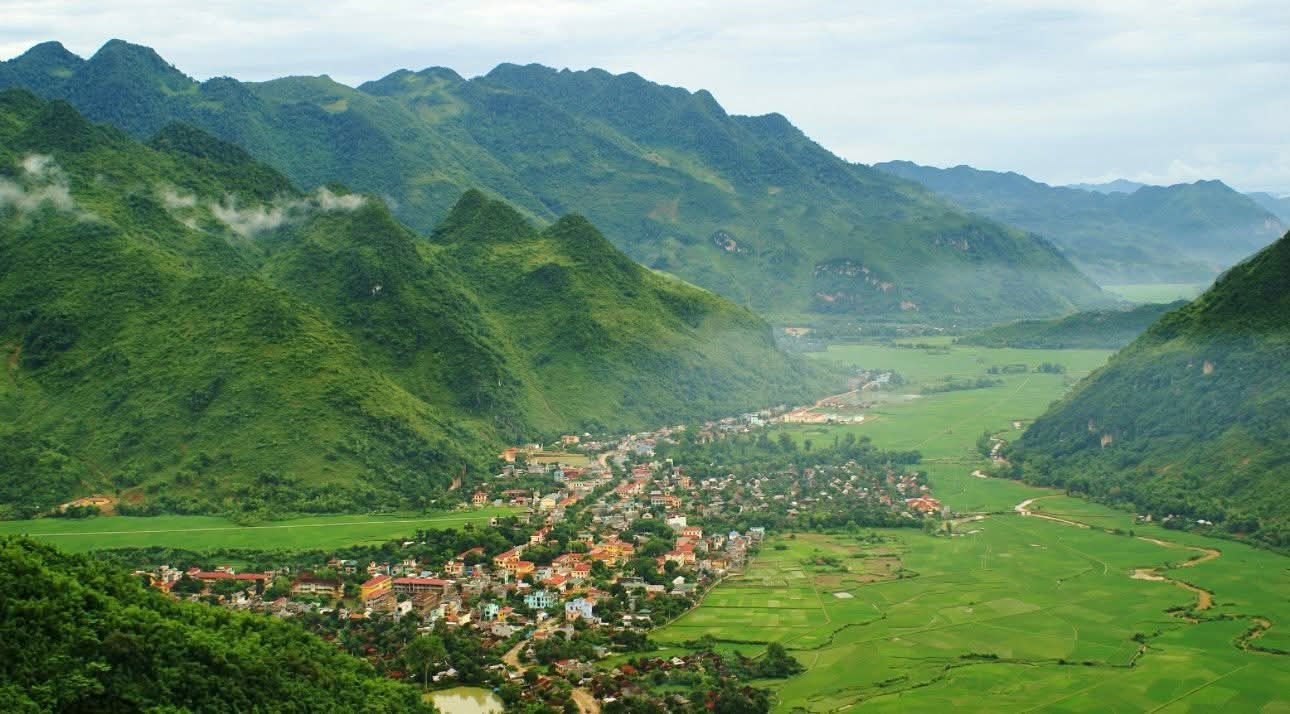
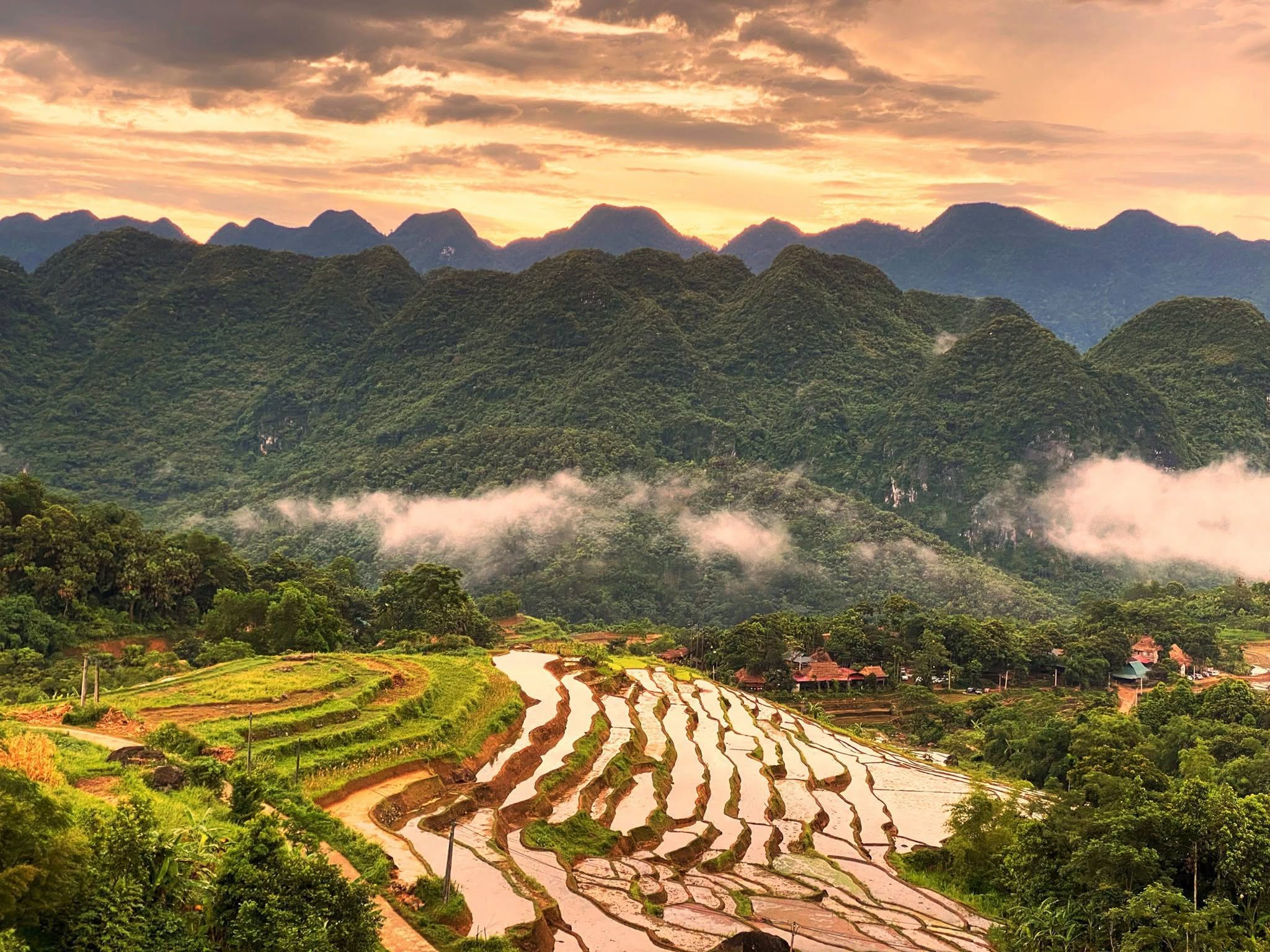
Featured image: Mai Chau Valley and its surrounding mountains. (Source: Collected)
Mai Chau rewards a different kind of planning from a city break. Your most memorable afternoon might involve a bicycle ride between villages, a conversation over tea and an unhurried dinner, with mountains framing the fields outside. This Mai Chau travel guide helps you choose the right length of stay, accommodation and activity level for that experience.
For a first visit from Hanoi, two days and one night is a practical introduction; three days and two nights gives you a full day without a long transfer. Start with the experience you want most, then choose your base and transport around it. A family seeking short walks, a couple booking a retreat and cyclists planning longer outings can enjoy the same destination very differently.
1. Understand Mai Chau and Choose Your Travel Style
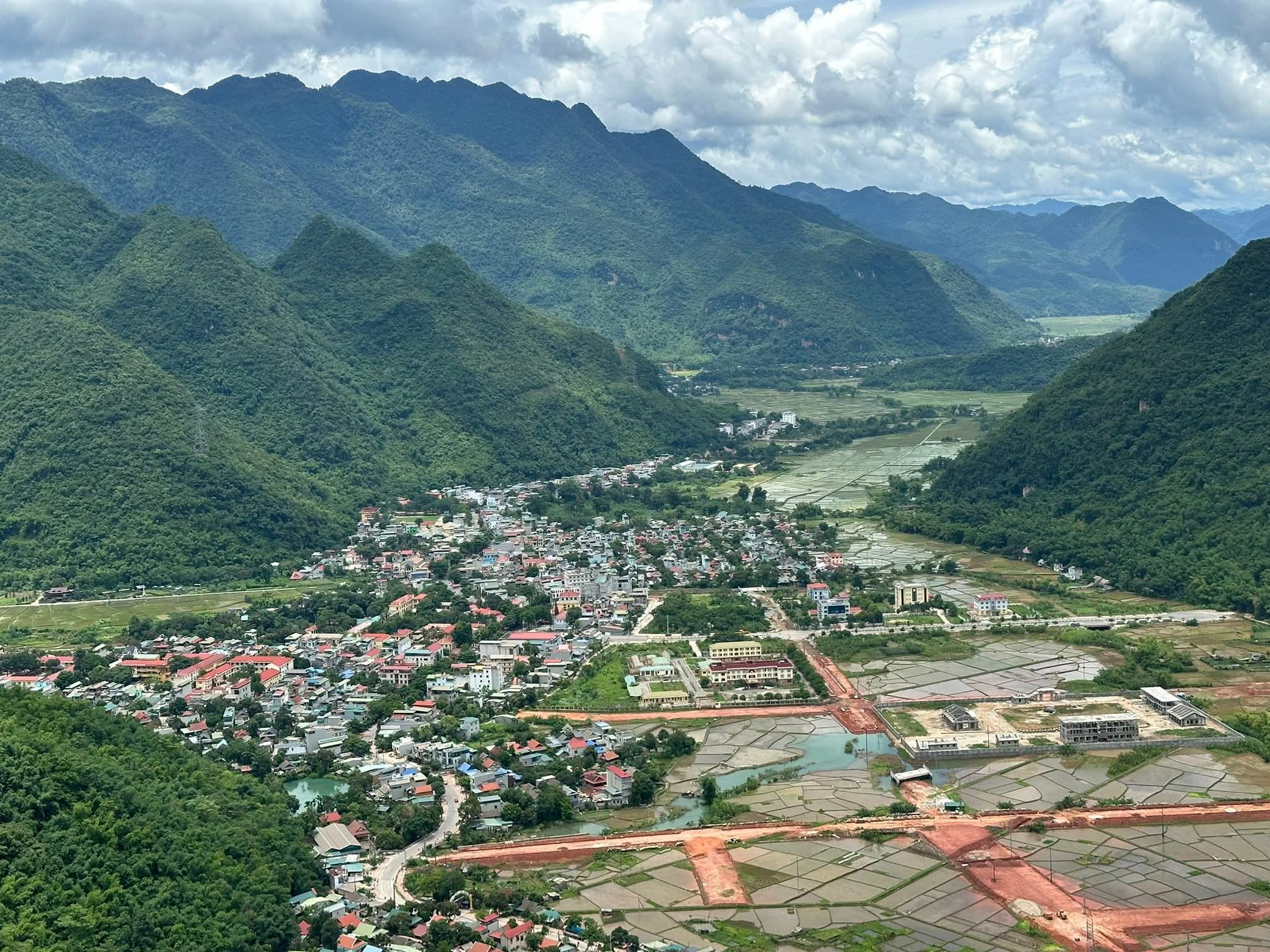
Mai Chau’s settlements and agricultural land lie within a broad mountain valley. (Source: Collected)
Where is Mai Chau?
Mai Chau lies southwest of Hanoi, in a valley surrounded by mountains. Older maps and booking descriptions place it in Hoa Binh Province. Following the 2025 provincial reorganisation, the area is now within Phu Tho Province. The familiar destination name remains useful, but confirm your accommodation’s exact map pin rather than relying on the province listed in an older article.
Think of Mai Chau as several connected settings: the town and its practical services; established tourism villages such as Lac and Pom Coong; surrounding agricultural villages; and more distant hillside or lakeside properties. These locations are not interchangeable when planning walks, meals or transfers.
The valley landscape is a major part of the appeal. Fields lie between settlements and mountain slopes, and village lanes offer ways to explore at a modest pace. Do not expect every view to resemble the steep terraces associated with Vietnam’s higher mountain destinations.
Who is Mai Chau suitable for?
Mai Chau suits travellers who enjoy countryside, local food and time outdoors without needing a demanding trek every day. Families can build a visit around short outings and rest. Couples can combine comfortable accommodation with a guided village visit. Photographers can leave space for changing light and ordinary agricultural activity.
It also works for people who want a rural contrast after Hanoi. However, being a countryside destination does not guarantee silence: group dinners, traffic and events can affect particular properties. If your priority is quiet, ask about your room’s surroundings and other bookings before paying.
Choose one main approach
Travel style
A sensible focus
What to prioritise
Rural retreat
A comfortable base, short walks and relaxed meals
Room access, setting and facilities
Village and cultural discovery
Guided visits, food and textile traditions
A knowledgeable guide and willing hosts
Active exploration
Longer cycling or walking, possibly continuing to Pu Luong
Terrain, equipment and support
Choose activities that complement your stay. Someone paying for a scenic lodge may enjoy an afternoon there more than another excursion. An active traveller may prefer a simpler room and a better guide. Decide where your time and budget will make the greatest difference.
2. Decide When to Visit and How Long to Stay
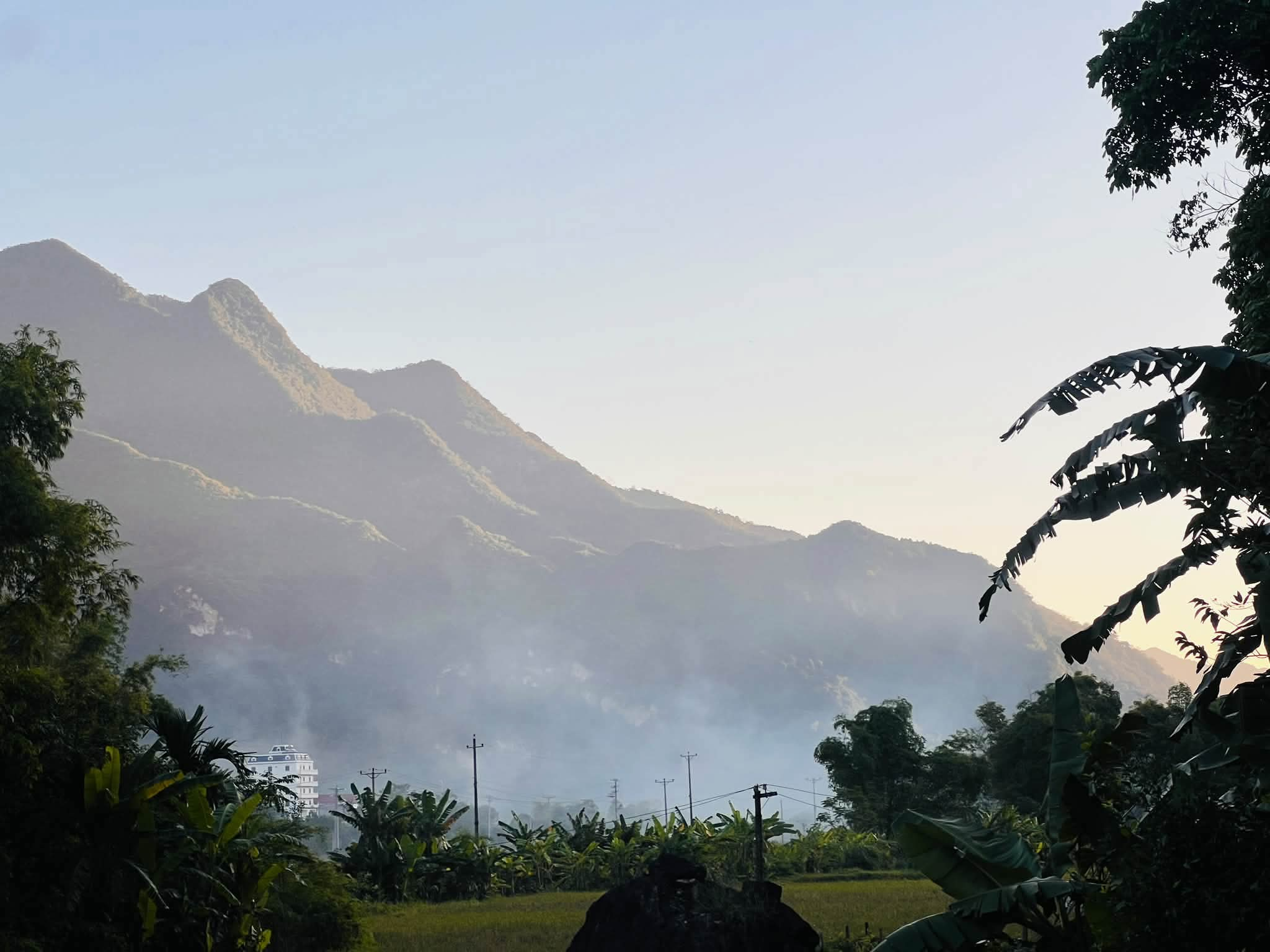
Soft morning light and mist settle over the mountains around Mai Chau. (Source: Collected)
Weather and outdoor comfort
March to May and September to November are useful starting points for planning, but conditions change within these broad windows. Summer can be hot and humid, with heavier rain generally occurring between May and September. Winter can bring cool, damp spells, making room warmth relevant even when photographs suggest a tropical escape.
For walking and cycling, temperature, rainfall and the condition of the route matter more than a simple “best month” label. A dry morning can suit an outing during a wetter period; a misty or rainy day can interrupt plans in a generally favourable season.
Period
Main considerations
A practical approach
December–February
Cool spells, dampness and variable visibility
Pack layers and check bedding and room warmth
March–April
Spring conditions with possible rain or mist
Combine outings with flexible indoor time
May–August
Increasing or strong heat, humidity and seasonal rain
Start early and keep exposed routes manageable
September–November
Autumn transition, with rain still possible
Check current conditions and local field stages
Rice scenery needs a separate check
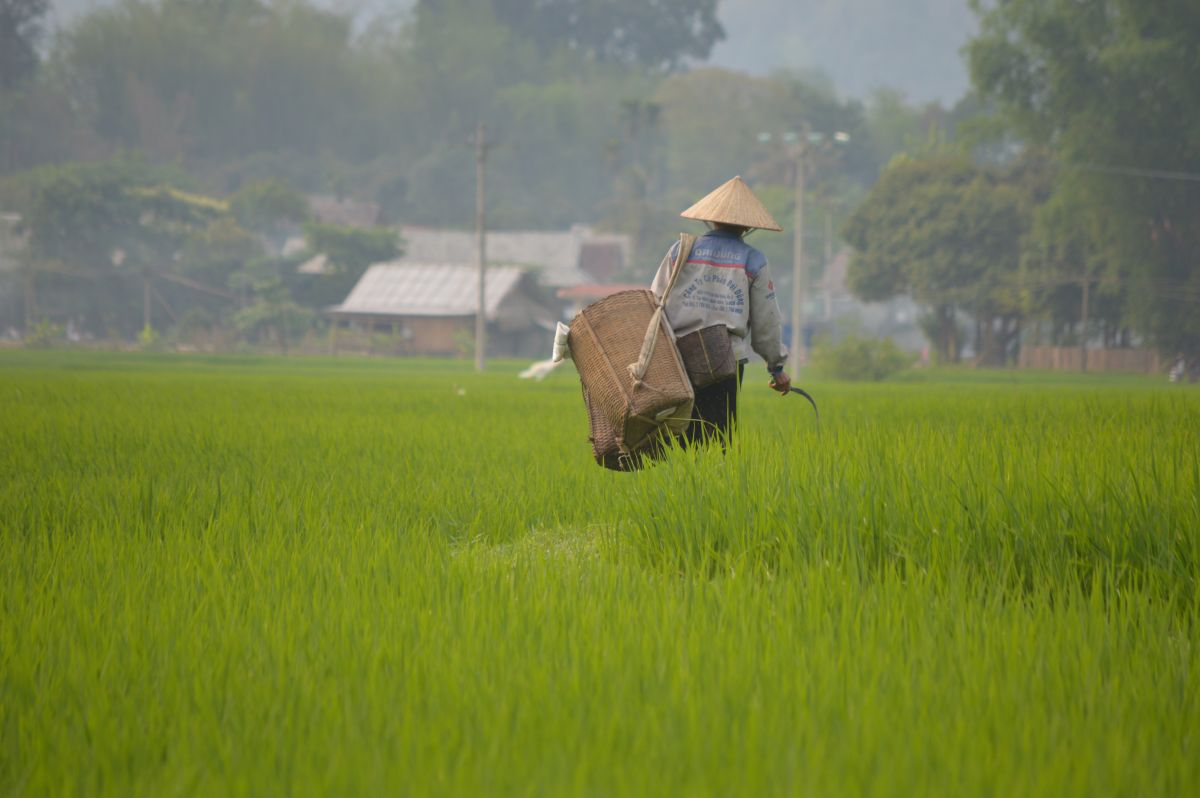
A farmer carries baskets through the rice fields of Mai Chau. (Source: Collected)
Pleasant weather and attractive rice fields do not always coincide. A field may be flooded, newly planted, green, ripening or recently harvested. These stages change the landscape, and neighbouring plots need not look the same.
If rice photography drives your travel dates, ask your host about the fields near the property and your planned route. Request recent photographs rather than relying on promotional images. Planting and harvesting depend on local conditions and farming decisions; no particular week guarantees golden rice.
Avoid applying Sapa’s agricultural calendar to Mai Chau. Build interest in food, village life and walking into the programme so that the trip remains rewarding after a harvest or during reduced visibility.
Day trip, one night or two nights?
Time available
What it allows
Main compromise
Day trip from Hanoi
Lunch and a selected village outing
Substantial driving relative to time in the valley
Two days, one night
An afternoon activity, dinner and a morning outside
Both days include travel
Three days, two nights
A full local day plus a flexible arrival and departure
Requires more room in the wider itinerary
A day trip is possible, but choose it with realistic expectations about road time. One overnight adds something specific: a morning before departure, an evening meal and less pressure to complete every activity immediately after arrival.
Two nights are particularly useful if you want a longer guided outing, time to enjoy your accommodation or flexibility around rain. They also allow members of a family to move at different speeds without making every hour feel scheduled.
3. Get to Mai Chau and Organise Local Transport
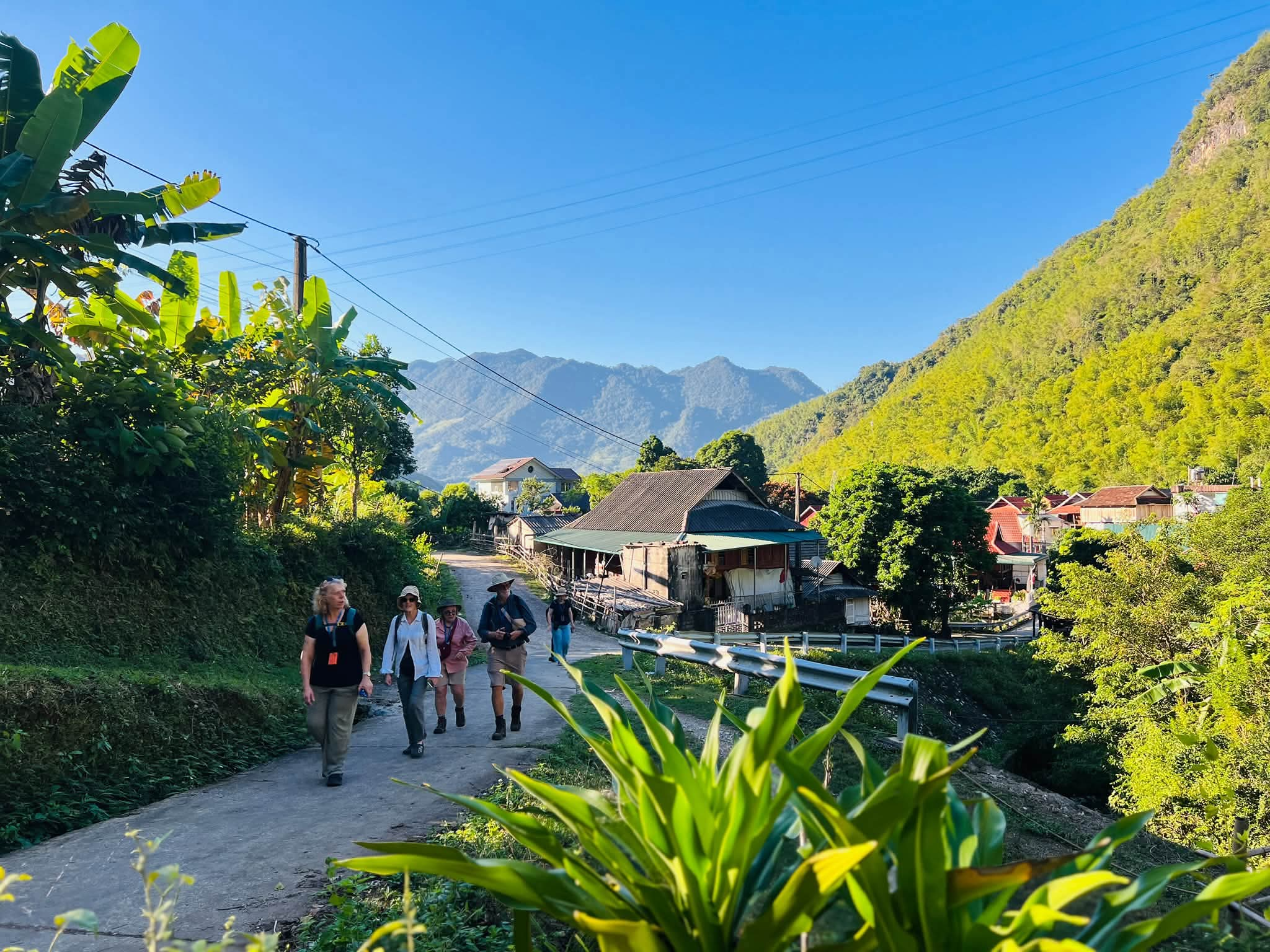
Visitors follow a village lane between houses and greenery in Mai Chau. (Source: Collected)
From Hanoi
Travel to Mai Chau is normally by road. Allow roughly three to four hours for many car journeys from Hanoi, then add time for your actual pickup, stops, traffic and final accommodation access. Treat this as an initial planning range, not a guaranteed arrival time.
A private transfer offers control over departure and breaks. Shared vans, accommodation transfers and bus options may suit travellers with more flexible timings. Confirm the current service directly: a destination name on a booking page does not establish hotel pickup or delivery to your room entrance.
Transport choice
Potential advantage
Check before booking
Private car
Flexible departure, breaks and luggage arrangements
Total price, vehicle size and final access
Shared transfer
Convenient when pickup and destination match
Timetable, seats, luggage and exact drop-off
Bus with onward pickup
May suit independent travellers
Arrival location and the remaining journey
Guided package
Transport and local arrangements coordinated
Activity level, group size and inclusions
Send the accommodation pin to the operator and ask who handles the last part of the journey. For families, request appropriate child seats in advance and confirm their availability. Travellers prone to motion sickness may appreciate daylight travel and planned breaks on winding sections.
Airport arrivals and departure connections
An airport pickup needs its own estimate rather than the timing quoted from central Hanoi. Include immigration, baggage collection and the possibility of a delayed flight when arranging the first evening. Confirm dinner if you expect to arrive late.
For the return journey, leave a generous margin before a flight or another fixed departure. Avoid planning an ambitious morning excursion followed by a tightly timed airport transfer. A relaxed final breakfast may serve the itinerary better.
Getting around the valley
Selected village lanes suit walking or cycling, while more distant outings require transport. Ask your accommodation to explain the surroundings: where you can walk comfortably, where roads carry traffic and which routes remain suitable after rain.
If cycling is unsuitable, investigate a guided walk or an available electric-cart outing. Confirm the route, boarding arrangements and current operation rather than assuming a cart reaches every village or viewpoint. A private vehicle can support selected stops, but cannot follow every path.
You do not need to ride a motorbike to enjoy Mai Chau. Build the local programme around transport everyone in your party can use confidently.
4. Choose Where to Stay and Plan Your Meals
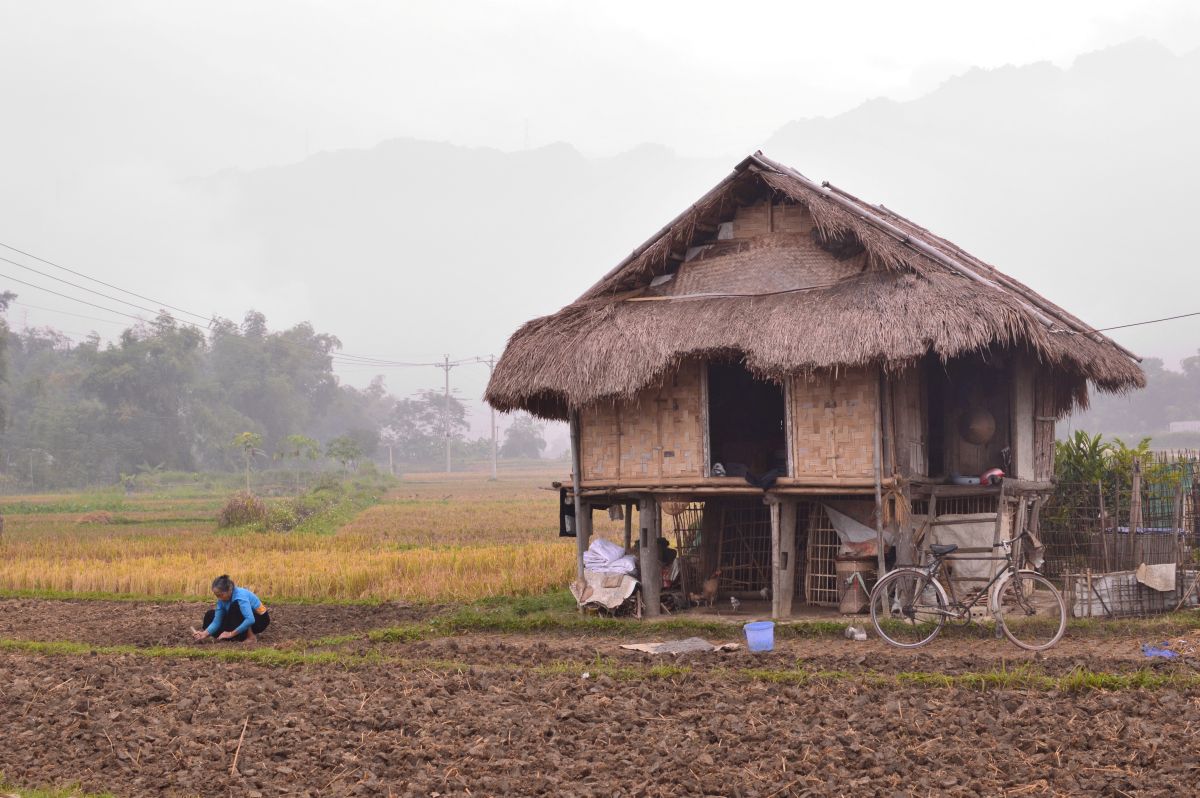
A raised wooden building stands beside cultivated fields in Mai Chau. (Source: Collected)
Village location or retreat setting?
Lac and Pom Coong are established places to investigate for village accommodation. Staying in or near a tourism village can make short walks, meals and browsing easier. The atmosphere varies by lane, property and date, so ask about group events if quiet evenings matter.
Accommodation overlooking fields or on the valley edge may offer more time with the landscape. However, a beautiful view can come with steps, a sloping approach or fewer nearby dining choices. Compare the practical location alongside the photographs.
Some resorts marketed under the wider Mai Chau destination sit farther away, including around Hoa Binh Lake. A lakeside stay can be a deliberate choice, but it should have its own transport plan. Check driving time to the villages you want to visit before assuming a daily walk from the hotel is possible.
Understand the accommodation label
Accommodation type
What may appeal
Questions that matter
Shared stilt-house stay
Communal space and a simple overnight experience
Sleeping layout, shared bathrooms and noise
Private homestay room
More privacy with opportunities to meet hosts
Who hosts, meals and actual room facilities
Guesthouse or valley lodge
Private rooms and potentially more services
Location, access and included activities
Resort or retreat
Facilities and time at the property
Steps, dining costs and distance from outings
“Homestay” can describe different business models. Ask whether a resident family hosts guests and what interaction is available. A private bungalow business may suit your comfort needs, but the name alone does not tell you what the stay involves.
Check hot water, ventilation or air conditioning, suitable bedding and bathroom arrangements. If mobility is limited, request photographs or a description of the entire route from vehicle to room and restaurant. “Ground floor” does not necessarily mean step-free access across the property.
For children, clarify bed arrangements, pool access and supervision needs. For light sleepers, ask about room separation and nearby communal spaces. These details often shape the visit more than an advertised star rating.
Food and dining
Local dishes to look for include bamboo-tube rice, grilled chicken, pork and seasonal vegetables. A meal is also an opportunity to ask your host about ingredients and preparation, rather than ordering the same dishes at every stop.
Arrange dinner before leaving for a long afternoon outing, especially at accommodation with limited alternatives nearby. Confirm portions, prices and whether meals are included. Tell the kitchen about dietary requirements early, including allergies to peanuts or ingredients that may appear in sauces.
Choose one meal with time to enjoy it. There is little benefit in booking a household lunch and then rushing away to meet an overfilled sightseeing schedule.
5. Choose Things to Do That Match Your Ability
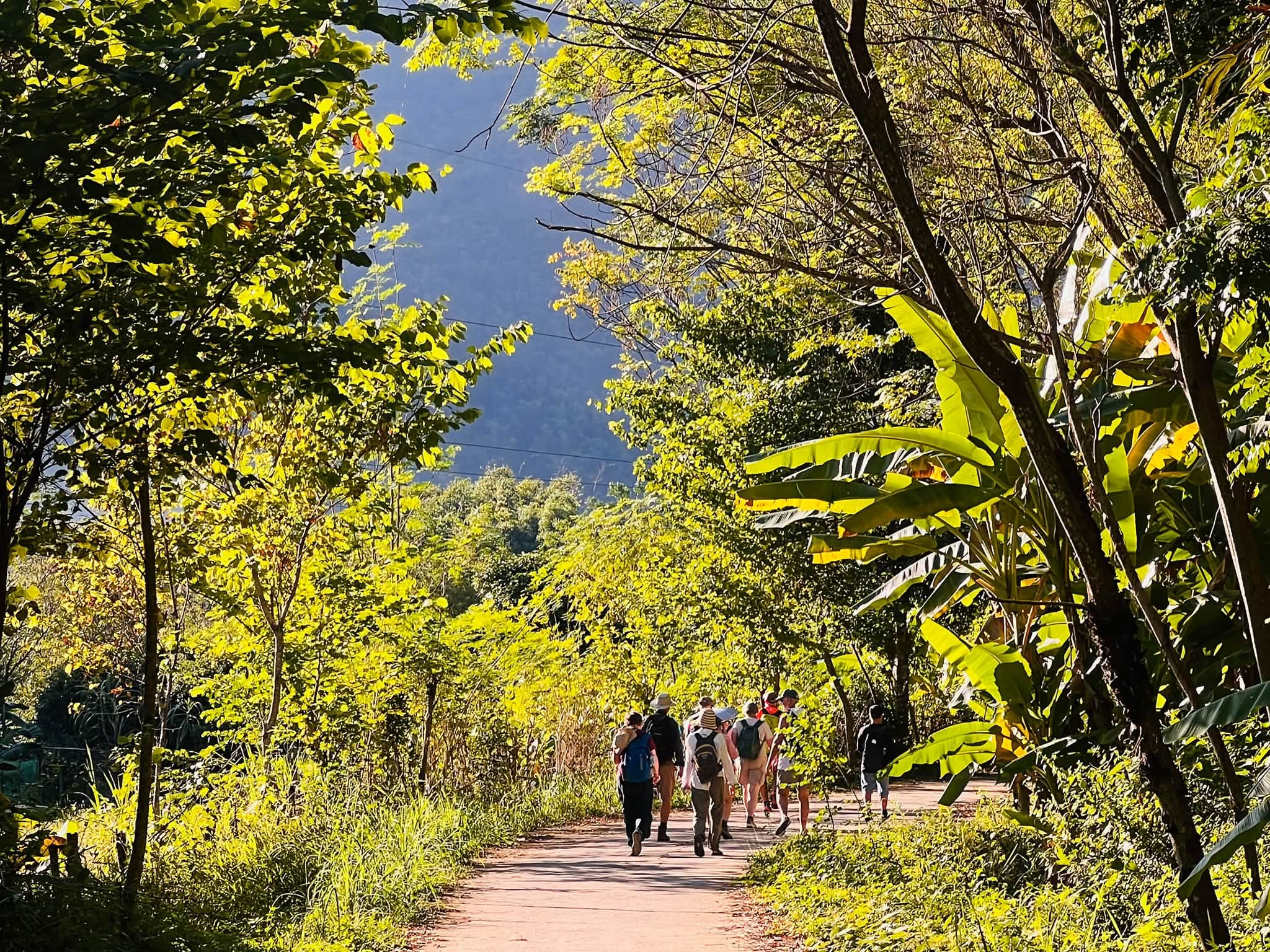
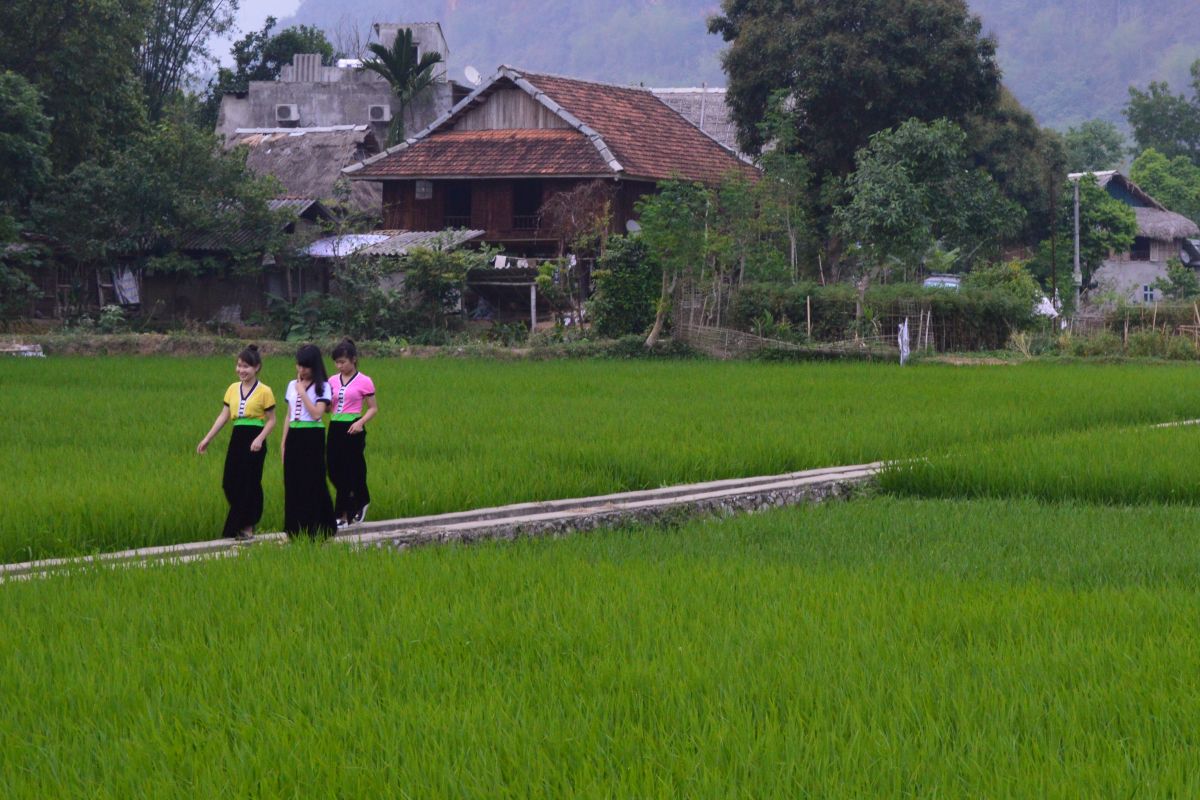
A group walks along a tree-lined village lane in Mai Chau. (Source: Collected)
Cycle through selected villages
Cycling lets you connect settlements and fields at a pace that leaves room to stop. Start with a short route if you are unsure of the terrain. Valley riding and hill riding are different activities, even when both appear under the same tour description.
Before hiring a bicycle, check its fit, brakes and tyres, and request a suitable helmet. Families should confirm children’s sizes and equipment before arrival. Ask about traffic, surfaces, shade and an easy return option; distance alone does not describe difficulty.
A guide can help select an appropriate route and explain what you pass. For confident independent riders, ask for current local advice rather than following an app onto a narrow farm path. Leave entrances and agricultural access clear when stopping.
Walk and spend time in villages
A short walk is a worthwhile activity in its own right. Choose a manageable route and leave time for observations or conversation. Moving slowly can be especially useful when travelling with children or photographing details of houses and daily work.
For a longer walk, ask about surface, elevation change and expected walking time. Do not book an outing described only as “easy trekking” without checking what that means. Wet steps, uneven ground and heat can make a short route demanding.
Household visits work best when agreed with willing hosts. Ask before entering homes or taking close portraits, and follow your host’s lead about shoes and private areas. Avoid giving children money or sweets in exchange for photographs.
Learn about textiles and local culture
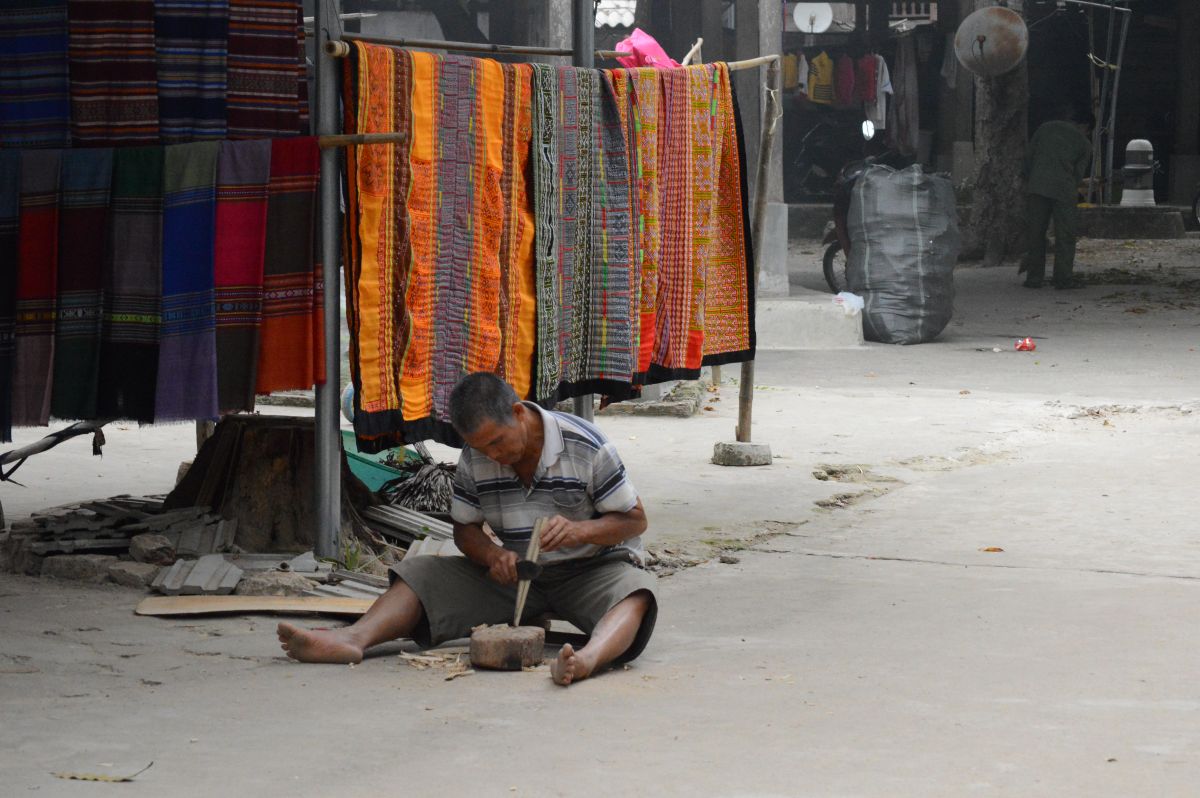
A craft worker sits beside colourful textile displays in a Mai Chau village. (Source: Collected)
White Thai cultural traditions are part of Mai Chau’s identity, including weaving and stilt-house architecture. Where a demonstration is available, ask about the process and the time involved. If buying textiles, ask who made the item and where it was produced.
Arrange a workshop if participation matters to you; seeing a loom does not guarantee a lesson. Similarly, confirm any music or dance performance before booking. These are organised activities with performers and costs, not a nightly event at every homestay.
Add one further outing when it fits
Nearby caves, lake activities or a longer countryside excursion may be worth considering, but each needs a check of access, travel time and conditions. Ask about steps and footing for caves, and equipment and weather for water activities. Choose a reliable operator rather than adding an excursion simply because it appears on a destination list.
For a more active extension, use our Pu Luong travel guide to compare the walking possibilities and logistics. A separate overnight can make more sense than trying to fit a substantial Pu Luong experience into an already busy Mai Chau day.
The Mai Chau and Pu Luong trekking adventure offers one example of a longer programme. Check the walking level and overnight arrangements against your own expectations.
6. Build Your Itinerary, Budget and Practical Checklist
Local residents stand beside rice fields with traditional houses beyond. (Source: Collected)
A balanced two-day introduction
On day one, travel from Hanoi, have lunch and settle in. Choose a short guided walk or bicycle ride in the afternoon, then return with time to rest before dinner. This works better than committing to a strenuous outing immediately after the drive.
On day two, leave time for breakfast and a morning village walk, a prearranged craft visit or a little more cycling. Return to Hanoi after the agreed checkout and meal arrangements. Keep the morning close enough to your base to avoid a rushed departure.
A slower three-day stay
Use the arrival afternoon for orientation. On the middle day, choose one main experience: a guided cycling route, a longer walk or a carefully arranged excursion. Leave part of the afternoon free, particularly in hot weather.
On the final morning, enjoy a shorter activity or time at the property. Couples seeking a retreat can reduce excursions further; active travellers can devote more of the middle day to a supported route. Families should build in breaks before children need them.
Combining Mai Chau with other destinations
Mai Chau and Pu Luong can work together when the itinerary gives them distinct roles. You might focus on village cycling in Mai Chau and guided walking in Pu Luong, rather than repeating short village stops at both.
Return or onward journeys, pickup, stops and final access
Accommodation
Room type, breakfast, taxes and child charges
Meals
Included meals, drinks and ordering arrangements
Activities
Guide, bicycle, equipment, admissions and support
Contingency
Weather changes, alternative transport and extra meals
A low room rate does not describe the total cost of a rural stay. Compare complete arrangements, especially when properties differ in location. Likewise, a private vehicle becomes a different per-person expense when shared by a family rather than two travellers.
Request a dated quotation and written inclusions. Check cancellation terms and what happens if an outdoor activity becomes unsuitable. Avoid treating old online prices as a current package offer.
Pack for the programme
Bring walking shoes with grip, sun protection, a light rain layer and clothing suitable for the season. Carry water for outings and a warmer layer for cooler periods. A small day bag is useful when your main luggage stays at the accommodation.
Keep some Vietnamese dong for smaller purchases and confirm payment methods in advance. Have your accommodation details available offline. Follow registration requirements at check-in and let hosts explain any local arrangements.
Frequently asked questions
Is one night enough in Mai Chau? One night allows an introduction with an afternoon and a morning outside. Choose two nights for a full local day or more flexibility.
Can I enjoy Mai Chau without cycling? Yes. Short walks, food, craft visits and time at your accommodation can form the core of the stay, with suitable transport arranged for other outings.
Is Mai Chau suitable for young children? It can be, with manageable activities, appropriate transport and accommodation checks. Confirm steps, sleeping arrangements and equipment before booking.
Will I see green or golden rice fields? That depends on the field and travel date. Check recent local information and keep other interests in the itinerary.
To plan your first visit, share your dates, group size, children’s ages, preferred accommodation and comfortable walking or cycling level. Choose the length of stay and daily pace together, then confirm transport and activities around the Mai Chau experience you want.